By Jacob Miller | Aug 18, 2026
Despite being a huge success, Grand Theft Auto 4 didn't quite match the sales figures of its predecessor, Grand Theft Auto: San Andreas. That earlier title had introduced a surprising amount of character customization for its time, along with other features that fans grew attached to. Several of those elements were missing when GTA 4 launched, which left some players disappointed. Now, new details suggest the developers had far more ambitious plans for the game than what actually shipped, and one particular idea was abandoned partway through.
NPCs Were Meant to Live Full Virtual Lives
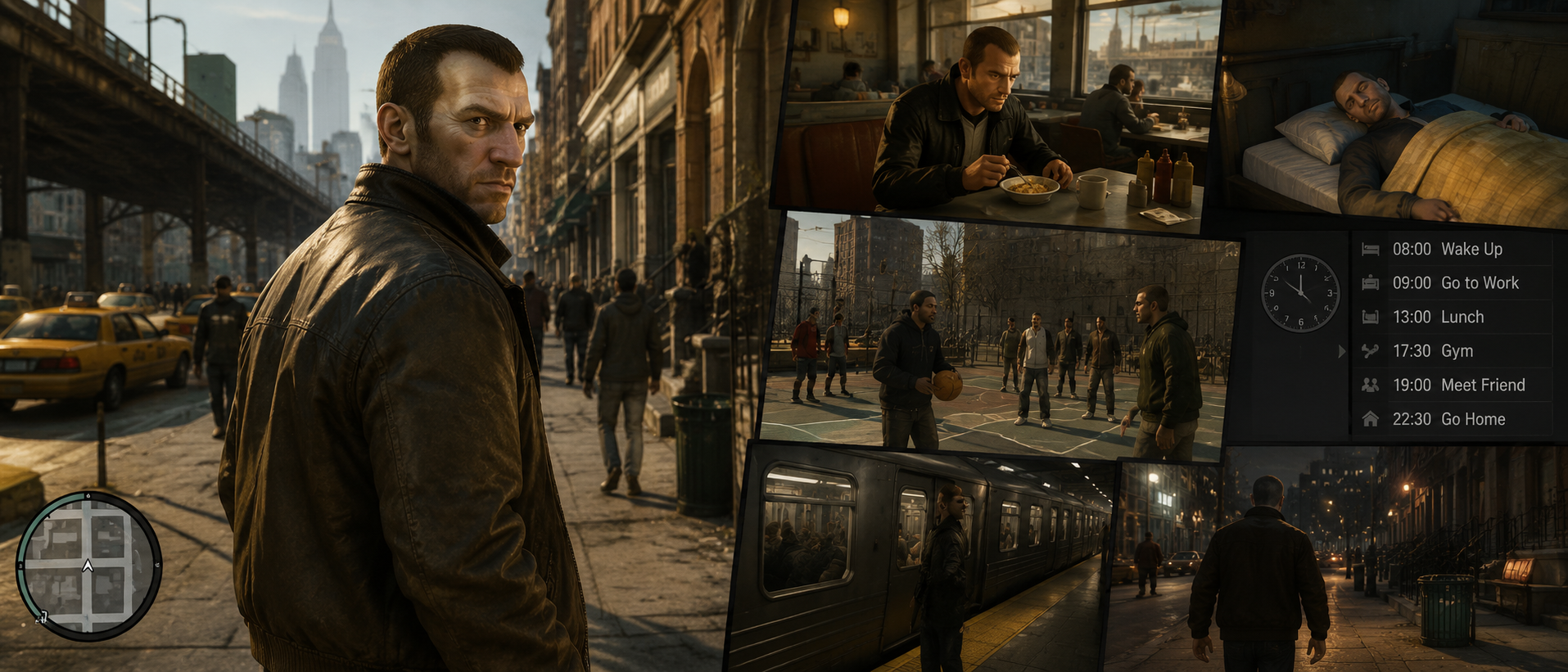
Former Grand Theft Auto 4 programmer Obbe Vermeij recently shared new insight into the game's development, revealing that NPCs were originally designed to behave in a much more realistic way. Vermeij explained that producer Leslie Benzies had pushed for non-playable characters to have complete daily routines, including permanent homes, set schedules, and habits like commuting to work each morning just as a real person would. The team spent a considerable amount of time chasing that vision, but according to Vermeij, it eventually became too troublesome to keep, generating a heavy load of bugs along the way. He also admitted he wasn't personally convinced the feature was worth the effort in the first place, arguing that the added realism "didn't really matter that much" and that players are generally comfortable with NPCs feeling a bit artificial rather than fully lifelike.
Why the Idea Didn't Survive Development
Looking back, it's easy to see why the feature might not have resonated with players even if it had made the cut. Many fans of the series are drawn to the chaos, the driving, and the freedom to cause trouble, rather than the finer details of how background characters spend their day. Giving NPCs strict routines could have gone largely unnoticed by most players, or worse, made certain missions frustrating if a required character wasn't where they were supposed to be. It's also likely that the console hardware of that era simply wasn't equipped to handle that level of simulation alongside GTA 4's already demanding open world and fast-paced action.
Interestingly, The Elder Scrolls: Oblivion had already experimented with scheduled NPC behavior two years before GTA 4 arrived. That system added a layer of immersion, since players needed to track the time of day to find certain characters or visit shops. But it also introduced plenty of frustration, particularly when the schedules broke down. Passing time while waiting sometimes threw NPCs off their intended paths, leading to odd situations like shops staying shut or opening late because the shopkeeper wasn't where the game expected them to be.
Striking the right balance with realism is tricky in game design. A certain amount can make a world feel alive, but too much can turn simple tasks into a chore. A former Rockstar developer recently suggested that a delay for GTA 6 wouldn't be shocking if the team needed more time to fix lingering bugs, which makes it a little easier to understand why Rockstar chose to drop this ambitious NPC system from GTA 4 rather than risk shipping an unstable game.