
Introduction
🎮 Ready to Survive the Ashfall?
I didn't expect to lose an entire Saturday to a game that runs in my browser tab. But here we are. Ashfall showed up quietly earlier this year, no big marketing push, no flashy trailer plastered across every gaming channel, and somehow it's turned into the conversation everyone in the survival genre is having right now. If you're even mildly curious about the Survival Game of 2026, Ashfall deserves your attention. Not because it reinvents the wheel. It doesn't, really. It just does the small things so well that you stop noticing you're playing something that lives entirely inside Chrome.
Let me back up a bit.
What Even Is Ashfall?
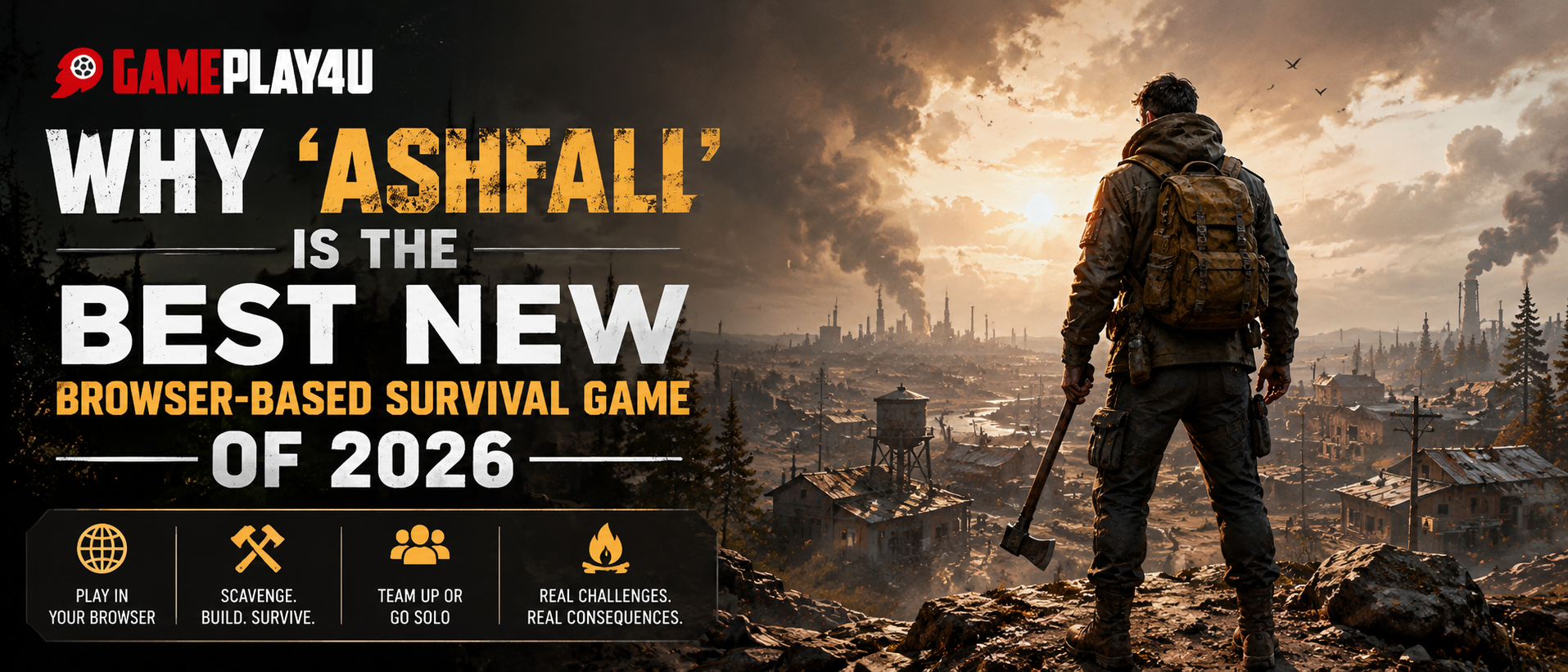
Ashfall is a browser-based survival game set on a fictional volcanic archipelago that's, well, falling apart. Literally. Ash rains down constantly, resources shift with the weather, and the map itself changes shape as eruptions reroute rivers and collapse cliffs. You start with nothing. A crafting knife, maybe a half-empty canteen, and a vague sense of dread. From there it's the usual survival loop: gather, craft, build, don't die. Except the pacing feels different. Tighter. Almost nervous, in a good way.
What surprised me most is that it's not trying to be the next big AAA survival title crammed into a browser. It knows what it is. Lightweight, accessible, quick to load, but with enough depth to keep you coming back. That's a hard balance to strike, and honestly, most browser games fumble it. Ashfall doesn't.
The Case for Ashfall as the Survival Game of 2026
So why is this the one? There have been a handful of browser survival games this year that tried something similar. Most fizzled out after a month or two of hype. Ashfall kept growing. Kept getting patched. Kept adding little touches that make it feel alive.
A few reasons stand out.
It respects your time. You can hop in, play fifteen minutes on a lunch break, and actually accomplish something. No fifteen-minute tutorial. No mandatory cutscenes. You're crafting a shelter within two minutes of opening the tab.
The volcano mechanic actually matters. This isn't cosmetic ash falling in the background for the atmosphere (though it does look great, I'll admit I stared at it longer than I should have the first time). Ash buildup affects visibility, clogs your water filters, and slowly degrades unprotected crops. You have to plan around it, not just admire it.
It never feels predatory. No loot boxes shoved in your face every five minutes. No paywall blocking basic survival mechanics. There's a cosmetic shop, sure, everyone needs revenue somehow, but nothing that affects actual gameplay. That alone puts it ahead of a lot of competitors.
I keep coming back to that word: respect. Respect for your time, your wallet, your intelligence as a player. It's rare.
Multiplayer Survival Games Are Having a Moment, and Ashfall Leads the Pack
Here's the thing about multiplayer survival games in general right now. The genre has been crowded for years. Everyone wants their own version of the "build a base, fend off threats, cooperate or betray your friends" formula. Most of them look similar after a while. Ashfall separates itself with a multiplayer structure that feels organic rather than forced.
You can play solo if you want, and it's genuinely enjoyable that way. But the multiplayer survival games crowd found something special here. Groups of up to eight players can share a volcanic zone, and the way resources are distributed means cooperation isn't just encouraged, it's kind of necessary once the eruptions ramp up in intensity. One person gathers water while another reinforces the shelter roof against ashfall, someone else scouting the unstable eastern ridge for salvageable metal. It clicks.
What I appreciate is that betrayal is possible but never mandatory. Some multiplayer survival games practically push you toward backstabbing your teammates because that's where the "content" is. Ashfall lets trust actually mean something. My little group of three friends has been playing together for about six weeks now, and we've never once had a reason to turn on each other. That says something about how the systems are built.
Small aside, but worth mentioning: the voice chat integration is surprisingly smooth for a browser game. No lag, no weird echo. I was fully expecting to switch over to Discord like I do for basically everything else. I didn't need to.
Graphics and Performance
Let's talk about how it actually looks and runs, because that matters a lot for anything browser-based.
Ashfall uses a stylized, slightly painterly art style rather than chasing photorealism. Smart move. Photorealism in a browser game usually means choppy frame rates and long load times. Instead, Ashfall leans into muted volcanic reds, ash-grey skies, and warm firelight from your camp that genuinely creates atmosphere without demanding a gaming rig.
I tested it on three different machines. An aging laptop that struggles with basically anything published after 2019, a mid-range desktop, and my work laptop (don't tell my manager). All three ran it smoothly. That accessibility is a big part of why it's climbing so fast in popularity. You don't need a $2,000 setup to enjoy the Survival Game of 2026. You need a browser and maybe twenty minutes.
Crafting and Progression: Deep Enough to Matter
The crafting tree in Ashfall isn't overwhelming, which I actually count as a compliment. Some survival games throw four hundred recipes at you in the first hour and it becomes a spreadsheet exercise rather than a game. Ashfall paces it out. You unlock new crafting options as you survive longer, explore further, and interact with the volcanic hazards in specific ways.
The early game is about the basics. Shelter, water filtration, basic tools. Mid game opens up ash-resistant gear, which becomes essential once the eruption cycles intensify. The late game introduces some genuinely clever systems around geothermal energy, where you're basically harnessing the same volcano that's trying to kill you to power more advanced structures. There's a poetic irony there that I don't think is accidental.
Progression feels earned rather than grindy. That's a distinction that matters more than people give it credit for.
Community and Ongoing Support
One thing that convinced me Ashfall wasn't just a flash-in-the-pan browser experiment was watching how the developers have handled community feedback. Small indie team, from what I can tell, maybe a dozen people total. They've pushed updates almost weekly since launch. Bug fixes, balance changes, a couple of genuinely fun seasonal events tied to the in-game volcanic calendar.
The community itself has grown into something pretty tight-knit too. Reddit threads, a fairly active Discord, players sharing base designs and survival tips. It has that early-access-game energy where everyone feels like they're building something together, even though the core game is already solid and complete on its own.
A Few Rough Edges
I don't want to oversell this. Ashfall has some issues. The inventory management UI could use another pass, it gets cluttered fast once you're carrying more than a dozen item types. There have been a couple of server hiccups during peak hours, usually weekend evenings, when too many multiplayer survival games sessions try to spin up at once. And the tutorial, while short, assumes a bit too much prior knowledge of survival game conventions for total newcomers.
None of these are dealbreakers. They're the kind of things a small dev team fixes over the next few patches. But it felt dishonest to write a glowing overview without mentioning them.
How Ashfall Compares to Other Browser Survival Titles
If you've played other browser-based survival attempts this year, you probably noticed most of them either lean too casual (basically idle games with a survival skin) or try to cram in mechanics that don't translate well to a browser environment. Ashfall found the middle ground. It's substantial enough to feel like a real game, streamlined enough to actually work within browser limitations.
Compared to some of the more established multiplayer survival games on Steam or other launchers, Ashfall obviously can't match the sheer scale or graphical fidelity. But that's not really the competition it's fighting. Within its own lane, browser-accessible, no download, no install, it's simply the strongest option available right now. That's the whole pitch, and it delivers on it.
Final Thoughts
I went into Ashfall expecting a decent way to kill some time between meetings. I came out of it genuinely excited about where browser gaming is heading. It's not flashy. It's not backed by a massive studio with an unlimited budget. What it has is thoughtful design, a community that actually cares, and a core loop that respects the player.
Calling it the Survival Game of 2026 might sound like a big claim this early in the year, but honestly, nothing else I've tried in this space comes close to matching what Ashfall pulls off within the constraints of a browser tab. If you're even slightly interested in multiplayer survival games, or you just want something you can jump into without downloading a forty gigabyte client, give it a shot. Worst case, you lose an hour. Best case, you lose your whole Saturday, like I did.
🎮 Ready to Survive the Ashfall?

